
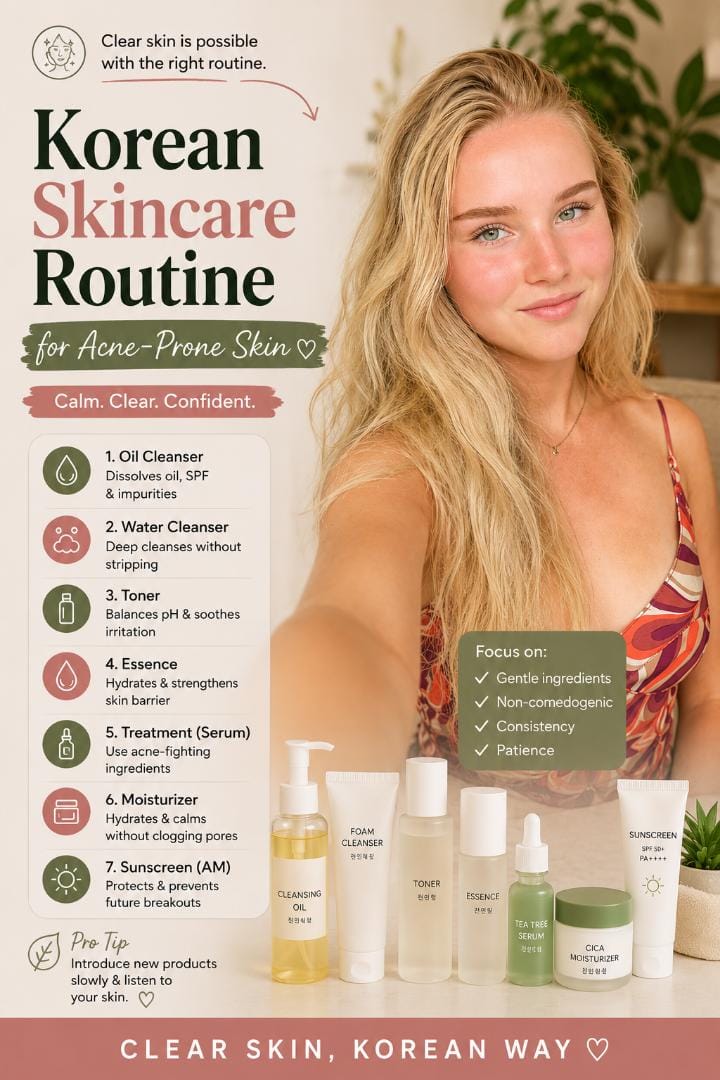
Korean Skincare Routine for Acne: A Simple Guide for Clearer, Healthier Skin
Dealing with acne can feel frustrating, especially when you’ve tried countless products without seeing lasting improvement. While Korean skincare isn’t a cure for acne, its gentle, skin-first approach may help reduce irritation, support the skin barrier, and improve the overall appearance of acne-prone skin. The key is choosing the right products and following a consistent routine—not using as many products as possible.
In this guide, you’ll learn how to build a beginner-friendly Korean skincare routine for acne, which ingredients to look for, and common mistakes to avoid.
Quick Answer
A Korean skincare routine for acne focuses on gentle cleansing, lightweight hydration, calming ingredients, and daily sun protection. A simple routine typically includes a cleanser, toner, treatment serum, moisturizer, and sunscreen. The goal is to reduce excess oil, support the skin barrier, and help minimize breakouts without over-drying the skin.
Why Korean Skincare Works Well for Acne-Prone Skin
Korean skincare emphasizes prevention and maintaining a healthy skin barrier. Instead of relying only on harsh acne treatments, many routines combine gentle cleansing with hydrating and soothing ingredients that can help reduce irritation.
Benefits may include:
- Helping maintain skin hydration
- Supporting the skin’s protective barrier
- Reducing redness caused by dryness
- Balancing oil without stripping the skin
- Creating a healthier environment for acne-prone skin
Keep in mind that results vary, and severe or persistent acne should be evaluated by a dermatologist.
Step-by-Step Korean Skincare Routine for Acne
1. Gentle Cleanser
Start with a mild gel or foam cleanser that removes dirt, excess oil, and impurities without leaving your skin feeling tight. Cleansing twice daily is usually enough for most skin types.
2. Hydrating Toner
A lightweight, alcohol-free toner helps restore moisture after cleansing and prepares your skin for the next steps. Hydrated skin is often less prone to irritation.
3. Acne Treatment Serum
Choose a serum based on your skin concerns. Ingredients commonly used for acne-prone skin include:
- Niacinamide – Helps improve the appearance of enlarged pores and uneven skin tone.
- Salicylic Acid (BHA) – Helps exfoliate inside pores and reduce clogged pores.
- Centella Asiatica (Cica) – Known for its soothing properties.
- Tea Tree Extract – May help calm oily, blemish-prone skin.
Introduce active ingredients gradually to minimize irritation.
4. Lightweight Moisturizer
Even oily skin needs moisturizer. A non-comedogenic gel or lotion helps maintain the skin barrier and may reduce dryness caused by acne treatments.
5. Sunscreen (Morning Only)
Daily sunscreen is essential, especially if you’re using exfoliating acids or retinoids. Choose a broad-spectrum SPF 30 or higher that feels lightweight and doesn’t clog pores.
Ingredients to Look For
| Ingredient | Potential Benefit |
|---|---|
| Niacinamide | Helps improve skin texture and control excess oil |
| Salicylic Acid | Helps unclog pores |
| Centella Asiatica | Soothes irritated skin |
| Green Tea | Provides antioxidant support |
| Hyaluronic Acid | Hydrates without feeling heavy |
| Ceramides | Strengthen the skin barrier |
Common Acne Skincare Mistakes
Do
- Cleanse gently twice daily.
- Moisturize every day.
- Wear sunscreen daily.
- Introduce one new product at a time.
- Be patient with your routine.
Don’t
- Overwash your face.
- Use multiple strong acids together.
- Pick or squeeze pimples.
- Skip moisturizer because your skin is oily.
- Expect overnight results.
How Long Does It Take to See Improvement?
Consistency is important. Some people notice healthier-looking skin within a few weeks, while improvements in acne may take six to twelve weeks, depending on the severity of breakouts and the products used. Results vary from person to person.
When to See a Dermatologist
A skincare routine can help support acne-prone skin, but professional advice is recommended if you experience:
- Painful cystic acne
- Acne that leaves scars
- Breakouts that continue despite a consistent routine
- Severe redness or irritation after using skincare products
A dermatologist can recommend treatments tailored to your skin’s needs.
Frequently Asked Questions
Is Korean skincare good for acne?
Yes, many Korean skincare routines focus on gentle cleansing, hydration, and barrier support, which may benefit acne-prone skin when appropriate products are chosen.
Can oily skin use moisturizer?
Absolutely. Lightweight, non-comedogenic moisturizers help keep the skin balanced and may reduce irritation.
Is a 10-step routine necessary?
No. Most people with acne can follow a simple 5-step routine with excellent results.
Which Korean skincare ingredient is best for acne?
There isn’t one “best” ingredient. Niacinamide, salicylic acid, Centella Asiatica, and ceramides are commonly included in routines for acne-prone skin.
Can Korean skincare remove acne scars?
Skincare may help improve the appearance of post-acne marks over time, but deeper acne scars often require professional treatments such as chemical peels, laser therapy, or microneedling.
Conclusion
A Korean skincare routine for acne is built around gentle care rather than harsh treatments. By cleansing properly, using targeted ingredients, keeping your skin hydrated, and protecting it with sunscreen every day, you can support healthier-looking skin over time. Remember that consistency is more important than using many products, and if your acne is severe or persistent, consult a dermatologist for personalized treatment.