
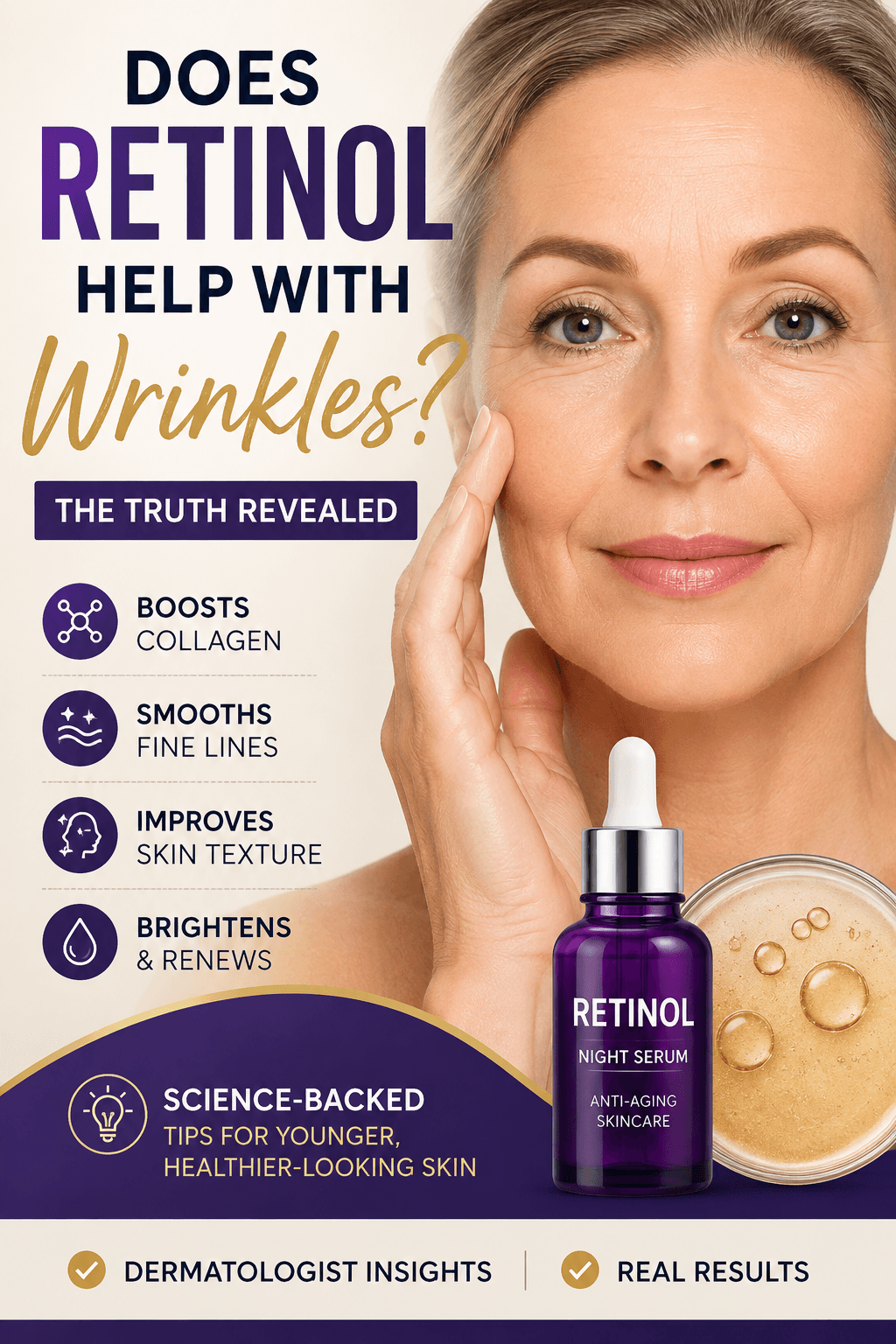
If you’ve ever searched does retinol help with wrinkles, you’re certainly not alone.
Retinol has become one of the most recommended anti-aging ingredients in skincare. Dermatologists often suggest it for reducing fine lines, improving skin texture, and boosting collagen production.
But is retinol really the miracle ingredient people claim it is?
The answer is yes—but with some important limitations.
In this guide, you’ll discover exactly how retinol works, who should use it, possible side effects, and why many people combine topical skincare with internal anti-aging support for better long-term results.
Best Supplements for Youthful Skin
What Is Retinol?
Retinol is a Vitamin A derivative that belongs to a family of compounds called retinoids.
Once absorbed into your skin, retinol converts into retinoic acid, which encourages skin cells to renew faster while stimulating collagen production.
As we age, collagen naturally declines, leading to:
- Wrinkles
- Fine lines
- Sagging skin
- Uneven texture
- Age spots
Retinol helps slow these visible signs of aging.
Does Retinol Help With Wrinkles?
The simple answer is yes.
Clinical studies show that consistent retinol use can noticeably improve:
- Fine lines
- Crow’s feet
- Forehead wrinkles
- Skin firmness
- Skin texture
Retinol works by increasing collagen production while speeding up skin cell turnover.
However…
It doesn’t erase wrinkles overnight.
Most users need:
- 8–12 weeks for visible improvement
- 3–6 months for significant wrinkle reduction
Consistency matters more than strength.
How Retinol Reduces Wrinkles
Retinol fights wrinkles through several mechanisms.
1. Boosts Collagen Production
Collagen gives skin its youthful firmness.
As collagen decreases with age, wrinkles appear.
Retinol stimulates fibroblasts that produce new collagen.
2. Speeds Cell Turnover
Dead skin cells accumulate over time.
Retinol helps replace old skin with newer, healthier skin cells.
The result is smoother skin.
3. Improves Skin Texture
Many users notice:
- smoother skin
- brighter complexion
- refined pores
- softer appearance
4. Reduces Age Spots
Retinol also fades sun damage by encouraging fresh skin growth.
Benefits of Retinol for Aging Skin
People who use retinol consistently often notice:
- fewer wrinkles
- smoother skin
- brighter complexion
- improved elasticity
- reduced pigmentation
- firmer appearance
These improvements usually happen gradually over several months.
Side Effects of Retinol
Although effective, retinol isn’t perfect.
Common side effects include:
- Dryness
- Peeling
- Redness
- Irritation
- Increased sun sensitivity
These are especially common when starting treatment.
Experts recommend:
- Begin with a low concentration
- Use only 2–3 nights weekly
- Moisturize generously
- Wear SPF every morning
Who Should Avoid Retinol?
Retinol may not be suitable for everyone.
Consult your healthcare provider if you:
- are pregnant
- have eczema
- have rosacea
- have extremely sensitive skin
Does Retinol Work Better With Other Anti-Aging Ingredients?
Yes.
Dermatologists often recommend combining retinol with:
- Hyaluronic Acid
- Niacinamide
- Peptides
- Ceramides
- Vitamin C (used separately)
Together these ingredients provide hydration while reducing irritation.
Can Internal Aging Affect Wrinkles?
Here’s something many skincare routines overlook.
Wrinkles aren’t caused only by changes on the skin’s surface.
Aging also affects:
- collagen production
- hormones
- cellular repair
- growth factors
That’s one reason some people explore lifestyle changes, proper nutrition, quality sleep, and certain wellness supplements alongside topical skincare.
Supporting overall health may complement a good skincare routine, though it isn’t a replacement for evidence-based skin treatments.
A Complementary Anti-Aging Option Worth Considering
If your goal is healthier-looking skin as part of a broader healthy-aging routine, some people choose to pair topical skincare with nutritional support.
One supplement that’s frequently marketed in the healthy-aging space is GenF20.
According to the manufacturer, GenF20 is designed to support the body’s natural production of growth hormone–related signals and is promoted for benefits such as improved skin appearance, vitality, and overall wellness. Keep in mind that these are manufacturer claims, and results can vary from person to person. It should not be considered a treatment for wrinkles or a substitute for proven skincare or medical advice.
If you’d like to learn more, you can visit official website here
How to Get the Best Results From Retinol
Follow these dermatologist-approved tips.
Cleanse gently
Avoid harsh scrubs.
Apply a pea-sized amount
More isn’t better.
Moisturize
Hydration reduces irritation.
Wear sunscreen daily
Retinol increases UV sensitivity.
Stay consistent
Most improvements require several months.
Frequently Asked Questions
Does retinol remove deep wrinkles?
No.
Retinol improves the appearance of wrinkles but doesn’t completely remove deep lines.
How long does retinol take to work?
Most people notice visible improvements within 8–12 weeks.
Can I use retinol every day?
Beginners should start two or three times weekly before increasing frequency as tolerated.
Is retinol better than vitamin C?
They serve different purposes.
Retinol mainly targets wrinkles.
Vitamin C focuses on brightening and antioxidant protection.
Can retinol make wrinkles worse?
During the adjustment period, dryness may temporarily make wrinkles appear more noticeable. With proper use and moisturizing, this usually improves.
Final Verdict: Does Retinol Help With Wrinkles?
So, does retinol help with wrinkles?
Yes. Retinol is one of the best-researched topical ingredients for improving the appearance of fine lines and wrinkles through increased collagen production and faster skin renewal. It works best with patience, sunscreen, and a consistent skincare routine.
If you’re also interested in supporting healthy aging more broadly, combining good skincare habits with healthy lifestyle choices—and carefully evaluating wellness products such as GenF20—may be worth considering. Just remember that supplements are not a replacement for proven topical treatments, and individual results vary.